
The 3,000 hit club is an exclusive one. Consider: in the long, long history of Major League Baseball and the proto leagues that preceded it, over 20,000 players have suited up for at least one game. Of those, just 1,421 players reached 1,000 career hits.
And merely 676 of those made it to 1,500 — there are more players than that on active rosters in MLB right now. All of 299 of those 670 players would then reach 2,000 career hits, 103 of those made it to 2,500, and all of 33 players that have ever played have crossed the 3,000-hit threshold. Houston Astros second baseman Jose Altuve is No.
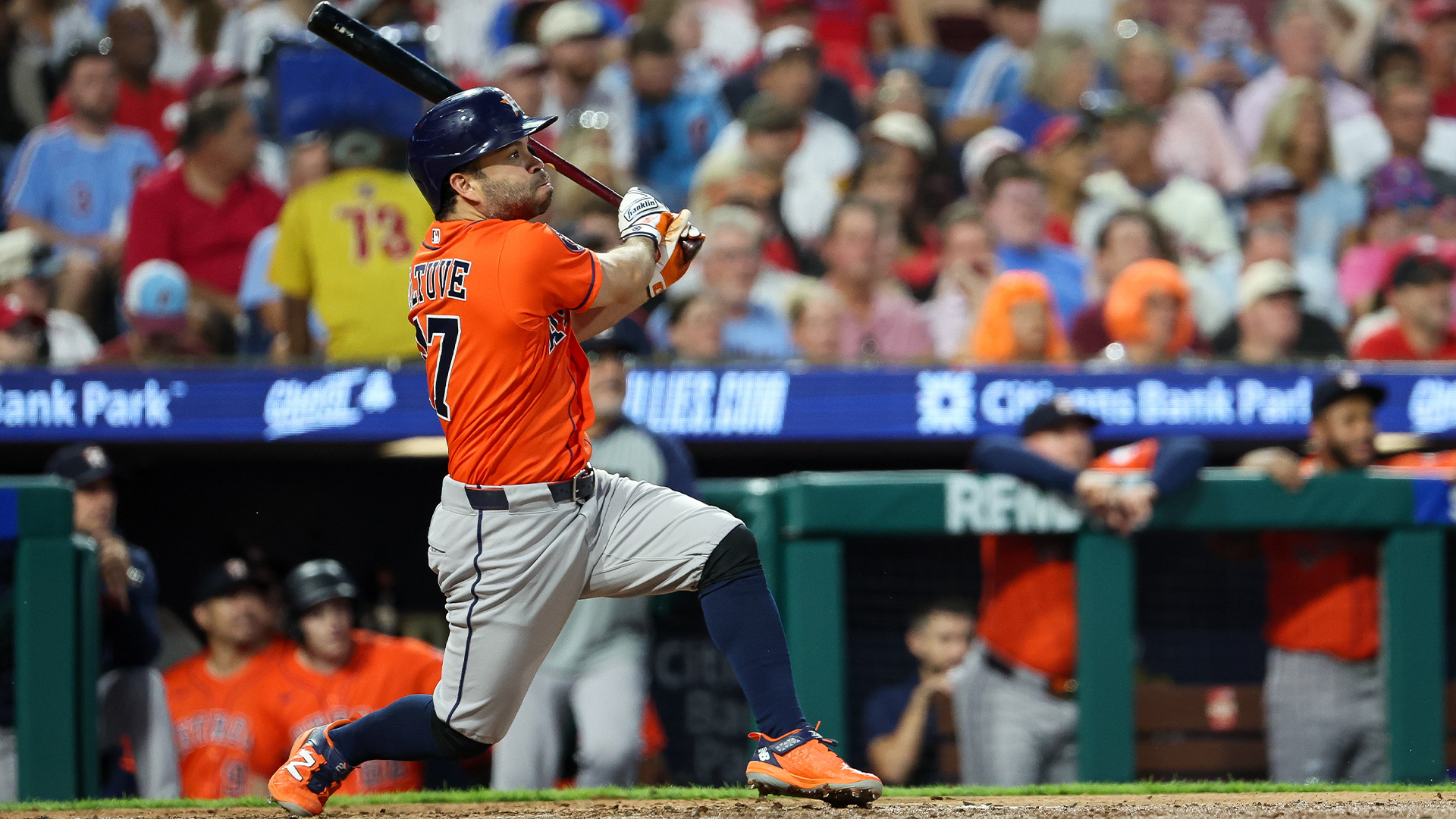
103 in the 2,500 hits club, as of Sept. 9. That's a seriously exclusive club to be in, but its exclusivity is nothing compared to that of the 3,000-hit one: as close as Altuve seems to 3,000 now, for instance, he's maybe not that close.
His chances are far from nonexistent, however: it's a distinct possibility that Altuve, despite his age and diminishing bat, still makes it to 3,000 before hanging up his cleats. But of all the incredible players to play in MLB, of the many, many Hall of Famers and stars, again, just 33 of them ever managed to pick up at least 3,000 hits. What about the rest of the active hit leaders, though?
Let's take a look at those with realistic chances of reaching this exclusive milestone – a list that includes Altuve as one of the closest to 3K. (Hit totals through Sept. 9.) The Los Angeles Dodgers' first baseman is the active hit leader, and doesn't appear to be that far off from 3,000 hits. Freeman turns 37 before the 2026 postseason, though, and is still 413 hits away.
He has 156 hits this year, and a three-year average of 157.7, so he would need three more years of production around this level to be able to pull it off. Which is not to say that Freeman can't manage it. The major concerns are his health and how it's tied to his age: Freeman continued to thrive despite some significant injuries that very easily could have derailed him, but as he gets older the small things feel like bigger things, and he's already seen a dip in his power this year.
Even if he becomes more of a singles hitter in his age-37, -38 and -39 campaigns, those knocks all count the same in the quest for 3,000. Freeman is the most likely to pull it off, not just because he's the closest, but because he's still really, really good despite entering his late-30s. Altuve is a fascinating case, as his career took off back when he was a high-average guy racking up hits.
Altuve led the American League in hits in four consecutive years, from 2014 through 2017, and also won batting titles in three of those seasons. He hasn't come very close to those levels since: Altuve collected 1,189 hits in his first six full seasons in the bigs, and then 1,250 in his next nine, including his nearly complete 2026. Second basemen tend to age poorly, since they were at that position in the first place given they were missing something in their tool and skill sets that allowed them to play shortstop instead, but to this point, Altuve has held on strong.
Mostly. Altuve, who turned 36 in May, started the first few weeks of the season looking like the return to second base from the outfield had rejuvenated his bat, but has basically hovered around league-average since: Altuve is batting .244/.306/.397, 21 points of batting average lower than 2025's already significantly lower than usual output. Altuve is 500 hits from 3,000, but from his age-33 season through his current age-36 campaign, he's averaged 141 hits per year.
At that pace, it would take four more seasons for Altuve to cross the 3,000-hit threshold: it's possible, but he can't afford to slip more than he already has since this hypothetical already requires that he plays into his 40s and gets another contract, too. Altuve's current deal with the Astros runs out after 2029, when he turns 39. Apologies to Andrew McCutchen and Paul Goldschmidt, who both rank ahead of Machado among the active hits leaders, but those two are 39 and 38, respectively – 3,000 is out of reach.
For Machado, though, it's still a possibility – but less of one that it was this time last year. Machado is playing in his age-33 season, but he's already been 34 for a couple of months, and is going to finish this season at least 800 hits shy of 3K. The problem was a terrible first half, in which Machado still had power, but little else: in his 100th game of the season, his batting average finally got over .200 to stay, and he's hit .277/.360/.429 since that point, swapping some power for better overall contact and more times on base.
Combine that with the fact that the Padres' third baseman plays his home games at Petco Park, which depresses offense. That issue isn't as extreme as it once was, but it still leans pitcher-friendly, and little things like that can be the difference between finishing a career with 3,000 hits or falling just short. Still, Machado has averaged 153 hits per season since 2021 even with his dreadful first half in '26.
If he could keep that pace, it would take him five more full seasons and part of another to reach 3,000. He probably won't keep that pace, though, given how aging works and all, so he might have more of an outside shot at the club than Freeman or Altuve. He's under contract with the Padres through 2033, his age-40 season, however, so he'll at least get plenty of chances to make it work by then.
This is where things get real dicey. Harper ranks seventh among active hit leaders: directly in front of him is Nolan Arenado, who has too few hits for his age for real consideration, and behind Harper is Carlos Santana, who is already 40 and over 1,100 away. There is also Xander Bogaerts, who is the same age as his teammate, Machado, and around 200 hits behind his not-a-lock pace.
Harper is an outside shot, too, but it feels like he shouldn't be discounted – basically solely because he's Bryce Harper. Health is his most pressing concern — on top of the pandemic-shortened 2020 that everyone else in his cohort suffered through statistically, he also missed 63 games in 2022 and 36 in 2023, and has cleared 150 games just three times in a career that began in 2012. He looks like he'll make it a fourth time in 2026, though, and while he's never going to bat .330 again like in his all-world 2015, if he can continue to average 140 knocks per season like he has over the last four, 3,000 is a possibility, but he'll be playing into his 40s for that to happen.
If Harper can stay on the field, though, and if he can continue to be Bryce Harper in all the ways that matter, then maybe something magical could happen here, and he'll surprise us all. He doesn't have much wiggle room for decline, however, owing to all the missed time he's already accrued that has him behind. Betts won't turn 34 until October, but a tough season with just 105 hits through Sept.
9 and a .249 batting average have him well off the pace now. Before 2026, Betts was already unlikely to reach 3,000 hits by the time he turned 40 years old, as it would have required an average level of production he saw in his late-20s. Now, he's 1,128 hits shy and nearly wrapped his age-33 season: he would need 161 hits per season to get to 3,000 by the time he turns 40, and tha feels about as unrealistic as him sticking it out another eight years to drop the average to 141.
All of this just highlights how difficult 3,000 hits is. Betts has been one of the most dynamic, exciting and unbelievably talented players to ever suit up for an MLB game. But just 33 players have ever reached 3,000 hits, and there are far, far more than 33 hitters enshrined in Cooperstown.
What could have been. Mike Trout would be a Hall of Famer if he retired right now, but like with Betts, that doesn't mean 3,000 hits will happen. What's frustrating about Trout's case is that he had his first 1,380 hits by the end of the 2020 season, and managed to add just another 487 over the next six years due to incessant injuries.
Trout has been relatively healthy the past two years, playing a combined 257 games, but it's resulted in 219 hits. He's a high-strikeout, low-contact player at this point, but one who can still drive the ball: of those 219 hits, 46 of them were homers and another 39 went for doubles. The volume just isn't there for Trout, who turned 35 earlier this summer, but again: he's already had an entire Hall of Fame career featuring one of the all-time great peaks.
That's a pretty good consolation prize. Another example of just how difficult it is to get to 3,000 hits is Mets' superstar Juan Soto. On the active hits leaders list, there is arguably no one with a better shot than him at 3,000, beyond those players already mentioned.
Soto began his career when he was 19, and won't turn 28 until the middle of this year's World Series. He's the highest-paid player in MLB, and it's because he's a tremendous, historic offensive force. And yet!
He needs another 1,822 hits to get to 3,000 at this point, to some degree because his career included the pandemic-shortened 2020 as well as an injury-shortened ‘26. But it’s also because Soto is an elite drawer of walks. Soto has been on base 2,190 times in his career, and is the active leader in on-base percentage at .415.
Just 20 players in the history of the game have reached base at least 2,000 times before turning 28; Soto ranks No. 7, behind Hall of Famers Mel Ott, Mickey Mantle, Jimmie Foxx and Ty Cobb, with Alex Rodriguez and Mike Trout ahead of him, as well. That's some company, and it's not difficult to envision Soto someday becoming just the 50th player to ever get on base 4,000 times in his career (Freeman is in line to become No.
49 in the next year). As for hits, though? Soto needs to average 140 hits per year for the next 13 years – the remainder of his contract with the Mets – to get to 3,000.
That's certainly possible at his age, but so are a whole lot of other things like injuries or natural decline. The 3,000-hit club is an elite one for a reason.


