

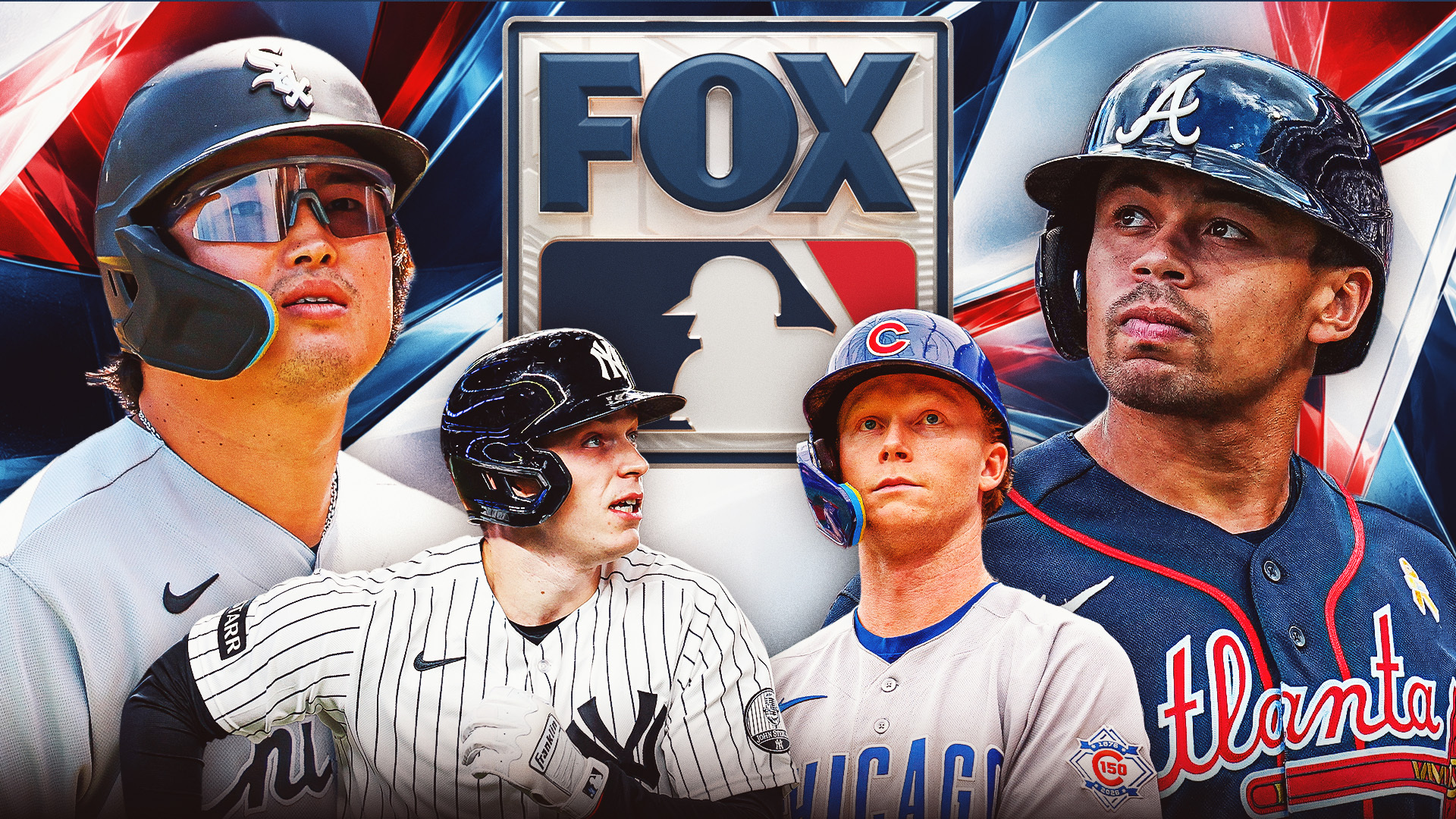
Playoff baseball is here. Let the games begin. Before all four best-of-three wild-card series start Tuesday, let's look at why each team can win, the X-factors to watch and series predictions.
NATIONAL LEAGUE Why the Cubs can win: They have the National League MVP favorite, Pete Crow-Armstrong, leading an offense that had the highest slugging percentage and OPS in the sport and a defense that was, by both standard and advanced metrics, clearly the best in baseball. Their pitching is more concerning, but their defense can mask a lot of issues as long as the Cubs can keep the ball in the park. Cubs X-factor: Alex Bregman.
Is he too talented to be considered an X-factor? Maybe, but he also just took a foul ball off the face a week ago. How did he respond to the facial fractures?
By going 4-for-4 with two home runs in the regular season finale. The Cubs’ offense didn’t look great in September, but Bregman — who had a 1.010 OPS in the second half — gives Crow-Armstrong a co-star. This is what the five-year, $175 million were for.
Why the Padres can win: They have all the momentum. The Padres went 35-17 over the season’s final two months behind an offense that went from the worst in baseball at the break to one of the best in the sport in the second half. Fernando Tatis Jr. launched 25 homers over his final 104 games, and he and Jackson Merrill were MLB’s only set of teammates with a 25-25 season.
They employ MLB’s most intimidating bullpen and closer (hello, Mason Miller), and they’ll get to play this series at home, where they were 51-30. Padres X-factor: Ethan Salas. At 20 years old, Salas is set to become the youngest player ever to appear in a postseason game as a catcher.
The Padres have other options at the position, but considering the way Salas performed down the stretch and stepped up in the Padres’ postseason-clinching win — he shook off an 0-for-14 start to his career to go 10-for-25 with a homer over his last 10 games — expect him to be involved. Who advances? Padres.
These were the two best offenses in baseball after the break, and the Cubs’ pitching concerns might be too significant to overcome at Petco Park. Why the Phillies can win: They have star power with plenty of experience on this stage. This is the Phillies’ fifth straight trip to the postseason with a core that includes Kyle Schwarber, who tied for MLB’s home run lead this year, and All-Star Bryce Harper.
They aren’t able to line up their star-studded rotation the way they’d like after a late-season slide forced them to use Zack Wheeler in Sunday’s regular season finale, but they still have some of the best high-end starting pitching in the sport. Cy Young contender Cristopher Sánchez should be ready to go for Game 2. And if the season’s on the line, I have a feeling Wheeler may still find his way into the mix.
Phillies X-factor: Jesús Luzardo. The last time Luzardo saw the Braves, he threw a complete-game, 12-strikeout shutout on Sept. 7.
That was also his last full start. Luzardo’s shoulder started bothering him after that 109-pitch appearance, forcing him to the injured list. He returned in relief in the regular-season finale and retired three batters on four pitches.
He finished the year ranked sixth in MLB with 221 strikeouts and is now slated to open for the Phillies in Game 1 against Sale. How much will he be able to give his team? Why the Braves can win: They had the best record in the wild-card field for a reason.
Chris Sale is one of the best pitchers in the sport. They have one of the best bullpens in baseball, one capable of shortening games for the less-intimidating rotation options after Sale. Power plays in October, and the Braves had the fourth-most homers in baseball.
Matt Olson is a 40-homer hitter, Ronald Acuna Jr. looked like a star down the stretch, and the Braves won nine of their 13 matchups against the Phillies this year. Braves X-factor: Tyler Mahle. The Braves should have the upper hand in Game 1, with Sale going up against what will likely be a limited version of Luzardo.
But the Braves’ biggest question is their rotation depth. Mahle was one of the most impactful players to move at the deadline, recording a 1.99 ERA in nine starts in Atlanta. Can he keep that going on the biggest stage?
Who advances? Phillies. Look, there’s too much randomness in October to go chalk across the board.
There’s a lot of pressure on the Braves to win the Sale start. If they don’t, they’re vulnerable. So, here is my pick that I certainly won’t come to regret after the Phillies’ nearly collapsed in historic fashion down the stretch.
AMERICAN LEAGUE Why the Red Sox can win: The Red Sox had the best record in baseball from June 25 through the end of the regular season, and they have one of the most complete pitching staffs in the game to help guide them through October. The Boston bullpen had the lowest ERA in MLB, and the top three in the starting rotation — Payton Tolle, Sonny Gray, Ranger Suárez — can compete with any playoff foe. Red Sox X-factor: Roman Anthony.
After missing nearly four months with a wrist issue, Anthony returned at the end of August and looked solid over his final 25 games. But the Red Sox, who struggled to score down the stretch, will need someone beyond Willson Contreras to help carry the offensive load. Anthony’s 10 hits (and six extra-base hits) in 30 at-bats over his final eight games of the regular season offered an auspicious sign.
Why the Yankees can win: Even with Aaron Judge missing more than half the season and set to miss this series, the Yankees hit the second-most home runs in MLB this season and ranked sixth in slugging. They have a 40-homer hitter in Ben Rice and a plethora of other contributors — Cody Bellinger, Jazz Chisholm Jr, Luis Garcia Jr., Paul Goldschmidt, among them — who can give their star-studded rotation enough support to make a deep run. Their starting pitchers had the lowest ERA in MLB this year, and a playoff rotation featuring AL Cy Young favorite Cam Schlittler, Max Fried, Gerrit Cole and Carlos Rodón can cause problems for even the best lineups in the sport.
Yankees X-factor: The deadline additions. It’s no secret that the Yankees’ offense packs less punch if Judge is continues to be out. That’s why they added help at the deadline, trading for Garcia and Heliot Ramos.
Garcia, who mashes righties, was the bigger impact player for the Yankees, despite his imperfect fit on the roster. But the right-handed Ramos does most of his damage against lefties, and the Red Sox have two southpaws in the starting rotation in Payton Tolle and Ranger Suárez. Who advances?
Yankees. After a roller-coaster season, the Red Sox finished 19th in OPS and 23rd in runs scored. In September, they ranked last in both categories.
They might have a tough time against the Yankees’ elite rotation, especially if Contreras doesn’t look right after hurting his hand last month. Why the White Sox can win: Beware a team with nothing to lose. While the aging Astros might feel the burden of trying to keep their shrinking playoff window open, the youthful White Sox have already outplayed all expectations, shaking off three straight 100-loss seasons to make it to the postseason for the first time since 2021.
Power plays in October, and they’re the only team in the sport with three 30-homer hitters (Munetaka Murakami, Miguel Vargas, Colson Montgomery). Astros pitchers, meanwhile, have surrendered the seventh-most homers in MLB. White Sox X-factor: Kyle Teel.
This was not the follow-up campaign that the White Sox envisioned for Teel, who injured his right hamstring during the World Baseball Classic and later dealt with knee and ankle injuries that limited the second-year player to 39 games following his promising rookie season. But Teel started to find his rhythm in September as the team’s primary catcher — he had an .863 OPS over his final 18 games — and will be needed both at the plate and behind it in October, with the White Sox likely to use a plethora of arms. Why the Astros can win: Sure, the White Sox have some pop in the lineup.
But which team hit the most home runs in MLB this season? That would be the Astros, led by AL MVP favorite Yordan Alvarez, who launched 42 home runs. Christian Walker, Isaac Paredes, Jeremy Peña and Cam Smith all went deep more than 20 times this year, and Yainer Diaz had an OPS over 1.000 over his final 22 games.
Astros X-factor: Hunter Brown. He’s the best starting pitcher in a series that has very little of it. The Astros need to win the games he starts if they have any hope of making an October run.
Who advances? Astros. Are they the only team ever to make the playoffs in a full season without a winning record?
Yes. Am I going to regret this choice? Possibly.
But they have the best player (Alvarez), the best pitcher (Brown) and the best closer (Josh Hader) in the series, plus the experience of having been here before. Meanwhile, Chicago’s best hitters struggled down the stretch, and they lack the frontline arms you want from a team in October (or late September).


